Produce low-carbon steel with precise monitoring. Optimise with CarbonOS.
TECHNOLOGY PARTNERS


.avif)

.avif)


.avif)

.avif)

Short answers on cost, emissions and carbon rules in a steel mill. To see them worked out with your own plant data, book a demo.
Carbonova connects blast furnace, steel shop, rolling mill and energy data to CarbonOS, a platform of AI agents that calculates emissions per tonne of iron and steel, flags drift in coal, gas and electricity use, and compares scrap, process-gas and route scenarios by their effect on cost and CO₂. Carbonova Build, in early access, adds process simulation and advanced process control.
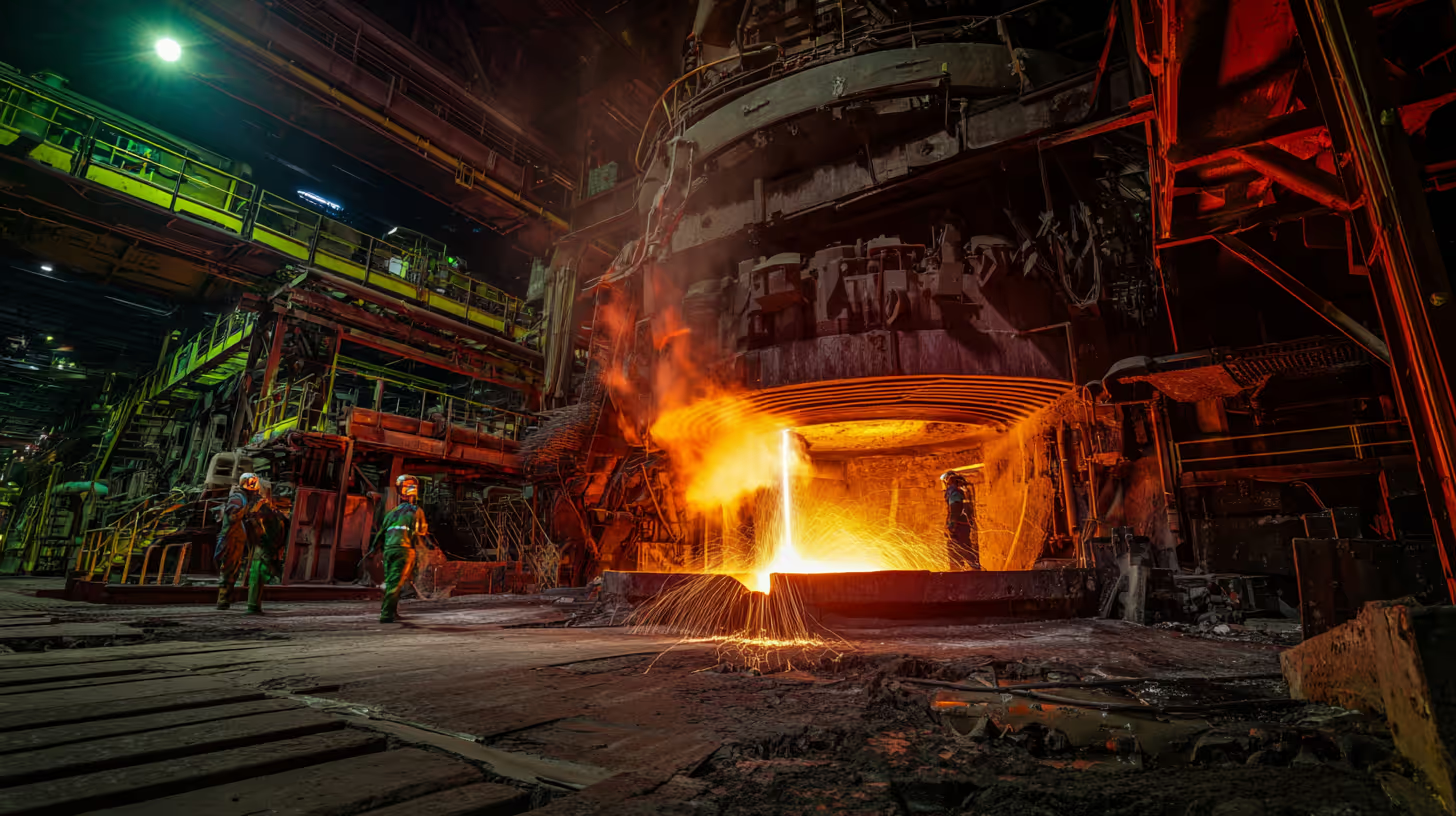
On the integrated route, most emissions come from the blast furnace, where coke and coal reduce iron ore and release CO₂; sinter plants, coke ovens and reheating furnaces add the rest. That is why the route matters so much: in 2024 the world average was 2.34 tCO₂ per tonne of steel for the blast furnace and basic oxygen furnace route, against 0.69 tCO₂ for scrap-based electric arc furnaces (worldsteel, 2025).
Steelworks emitting more than 100,000 tCO₂e a year are covered by the Safeguard Mechanism, whose baselines fall by 4.9% a year to 30 June 2030; a review of the post-2030 settings is under way. Large companies also report Scope 1, 2 and 3 emissions under AASB S2, which applied to Group 2 entities from reporting periods starting on or after 1 July 2026.
Each tonne of CO₂e below the baseline earns one Safeguard Mechanism Credit, which the facility can sell to other covered facilities or use for its own compliance; SMCs are not offsets. SMC spot prices reached $38.00 on 19 June 2026 (Clean Energy Regulator, 2026). Carbonova tracks emissions against the baseline and ranks scrap, process-gas and energy measures by the credits they create per dollar spent.
The planning agent uses the mill’s real data to simulate and rank, by cost per tonne of CO₂ avoided, measures such as a higher scrap share, better use of blast furnace, coke oven and converter gases, heat recovery and fuel switching. In Germany, integrated steelworks cover most of their own electricity by burning process gases (UBA, 2019), and Carbonova Build adds pinch analysis of heat exchange.
CarbonOS calculates product-level footprints from production, energy and raw-material data, with lineage back to the source, versioned emission factors and a change history, in line with the ISO 14064-3 verification standard. The same dataset supplies the emissions data EU importers need for CBAM, ISSB-aligned disclosures and carbon footprint requests from carmakers and other customers.