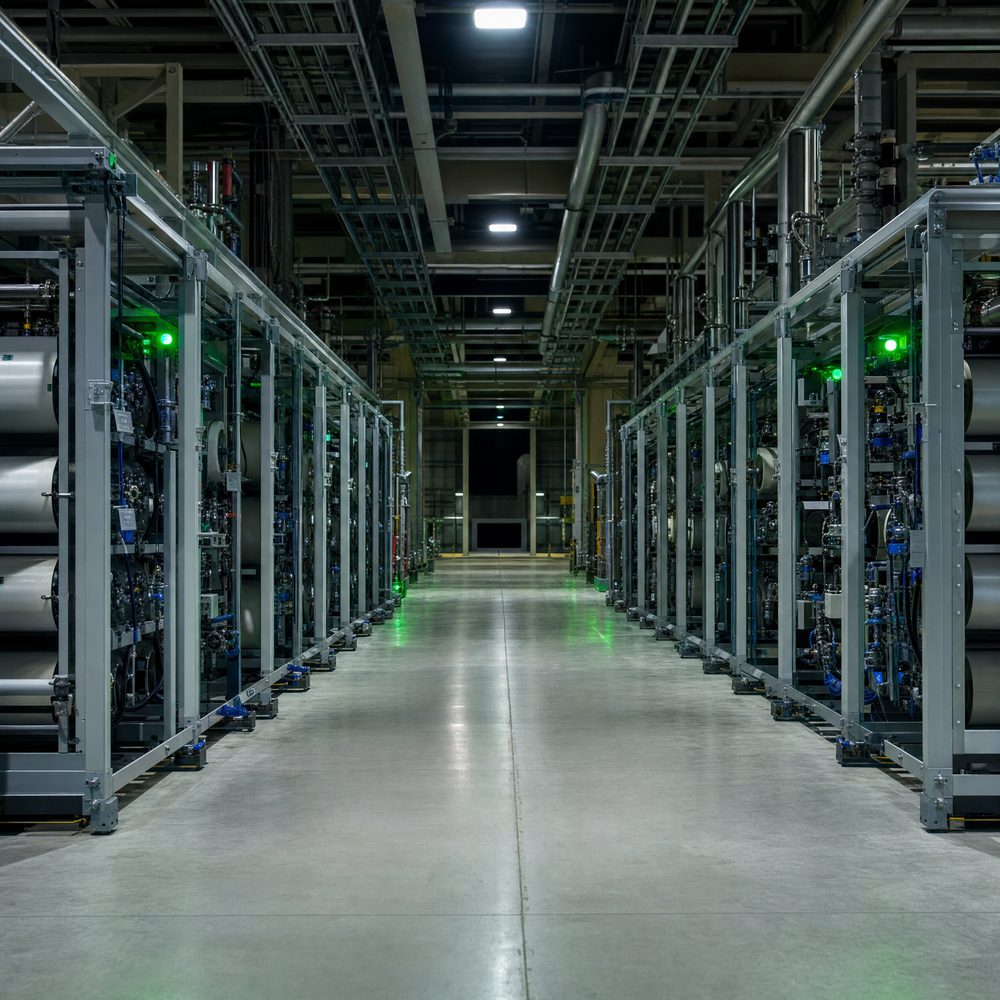
e-Fuels Intelligence.

The energy-efficiency intelligence for the fuels of the future. AI agents that optimise electrolysis, synthesis and certification in the production of green hydrogen, e-methanol, e-ammonia and e-SAF, from electron to certified molecule.
[what we do]
More molecules per kWh. Proof in every batch.
Automated inventory icon
Electron → molecule dispatch
Schedules electrolyser load hour by hour against the power contract, prices, wind and solar forecasts and curtailment, while respecting the synthesis minimum load, the hydrogen buffer and temporal-correlation rules.
Stack health
Tracks cell voltage, efficiency and degradation in every stack, anticipates failures and flags the right time to replace each stack, with the cost of degradation built into dispatch.
Regulatory compliance icon
Flexible synthesis
Adjusts the e-methanol, e-ammonia or Fischer-Tropsch loop when hydrogen supply varies: ramp rates, recycle, purge and catalyst conditions, measured in kWh per kilogram of product and independent of the licensor.
Footprint and certification per batch
Calculates each batch’s footprint from measured data and assembles the evidence pack for verification: Guarantee of Origin certificates in Australia and RFNBO certification for exports to the European Union.
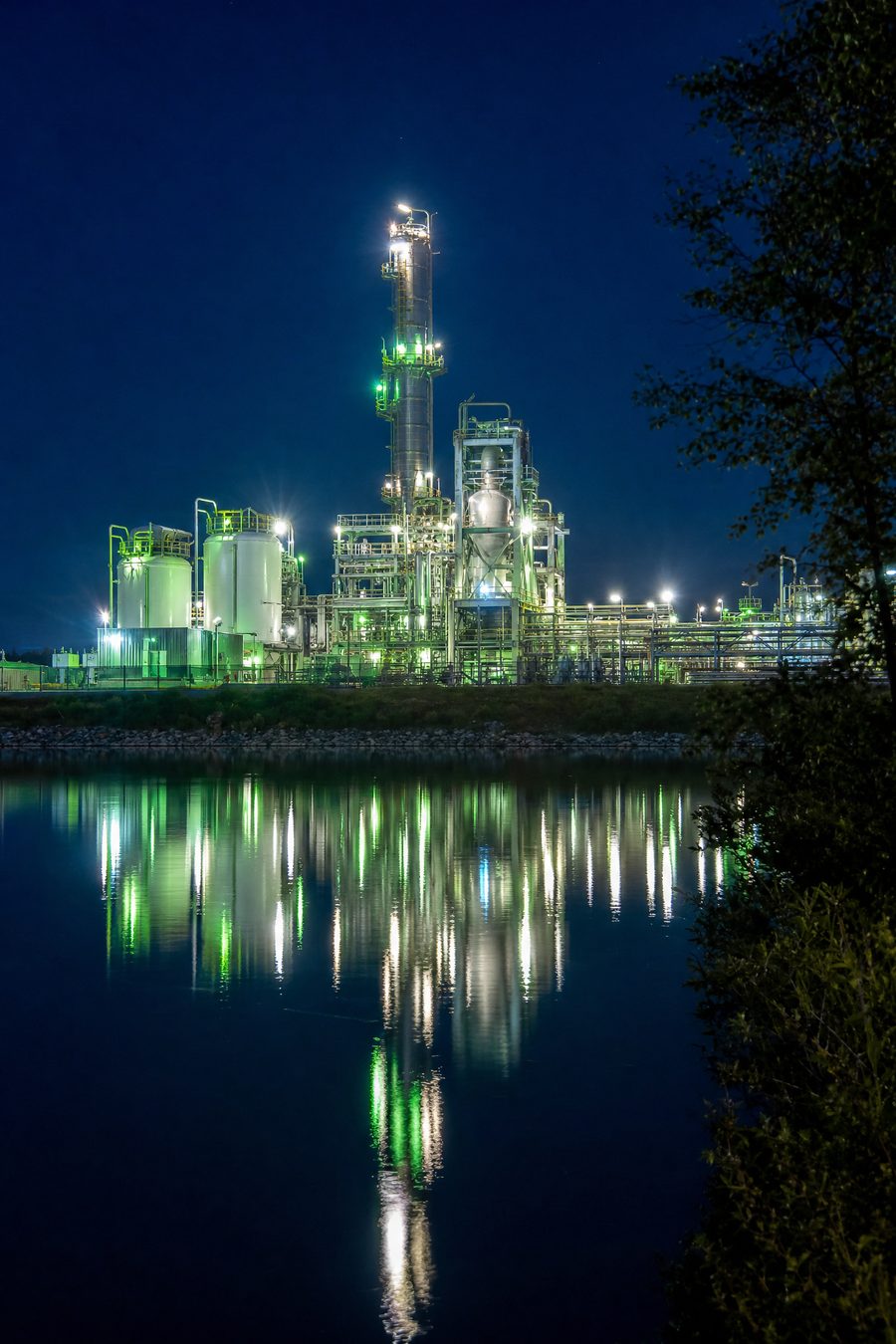
Planta de e-metanol iluminada à noite, refletida na água (ilustração gerada por IA)
In the European Union, most grid-connected plants selling renewable (RFNBO) hydrogen must match renewable electricity and output within the same calendar month until the end of 2029 and within the same hour from 2030, under the rules in force. The same data decides efficiency, certification and price. Evidence is no longer an annual report; it is operating data.
Guarantee of Origin scheme
Delegated Regulation (EU) 2023/1184
37 Mt
of low-emission hydrogen a year by 2030: the IEA’s latest count of announced projects, down from 49 Mt in its previous review. The plants that get built will be the efficient ones.
42%
of the hydrogen used by EU industry must be renewable fuel of non-biological origin (RFNBO) by 2030, and 60% by 2035, under RED III. Export demand written into law.
Right arrow iconRight arrow icon
learn more
Industrial facility monitored by the CarbonOS carbon management systemSustainable logistics and low-carbon transportationCorporate team in a meeting about climate complianceSustainability specialist analysing carbon emissions data
[our purpose]
Carbonova’s e-Fuels Intelligence connects power, process and certification in a single system: the same data that cuts kWh per kilogram proves the origin and footprint of every molecule. It runs above the plant’s control system, with any electrolyser and any licensor.
Right arrow iconRight arrow icon
learn more
[the carbonova solution]
From electron to certified molecule.
Renewable energy icon
Hourly simulation of the project before FID: electrolysis, renewables, storage and synthesis sized against historical curtailment and price data.
Real-time optimised operations: dispatch, stack health and flexible synthesis, measured in kWh per kilogram of product.
Continuous certification evidence: footprint per batch, an audit trail and data ready for Guarantee of Origin certificates and RFNBO.
kWh per kg
footprint per batch
[ON THE PLATFORM]

How it works in CarbonOS

Six agents read the plant and the power market and return decisions and evidence, not reports.

01 · MEASURE
Power, process and market data in one place

Reads the DCS, historian and meters, plus wind, solar and price forecasts, and closes the balance from electron to molecule.

02 · DECIDE
Dispatch and synthesis, hour by hour

Agents adjust load, buffer and synthesis for the lowest kWh per kilogram, within certification rules and the plant’s limits.

03 · PROVE
Footprint and evidence per batch

Every batch leaves with its carbon intensity calculated and the audit trail ready for the certification body and the buyer.

app.carbonova.ai · e-Fuels Intelligence
e-Methanol plant (demo)
Specific energy use
10.9 MWh/t
Capacity factor
71%
Batch footprint
11 gCO₂e/MJ
Active agents
● 6
illustrative data from the demo environment
Electrolysise-methanole-ammoniae-SAFGO scheme · RFNBO
[Frequently asked questions]

e-Fuels and green hydrogen with AI: frequently asked questions

Short answers on power costs, operations and certification in green hydrogen and e-fuel plants. To see it with your project data, book a demo.

Right arrow iconRight arrow icon
book a demo

What is Carbonova’s e-Fuels Intelligence?

Up arrow icon

It is a set of CarbonOS AI agents for green hydrogen and e-fuel plants, such as e-methanol, e-ammonia and e-SAF. The agents schedule electrolyser load hour by hour, track stack health, adjust synthesis when hydrogen supply varies and calculate each batch’s footprint as evidence for certification. The system runs above the plant’s control system, with any electrolyser and any licensor.

What problems does e-Fuels Intelligence solve, and who is it for?

Up arrow icon

In e-fuels, electricity is the largest cost in every molecule, so every kWh per kilogram decides the margin. The solution is for developers and operators of electrolysis and synthesis plants: plant managers, process engineers, power traders and the people in charge of certification. Before FID it simulates the project hour by hour; in operation it targets the lowest kWh per kilogram and keeps each batch’s evidence ready for the verifier and the buyer.

How does e-Fuels Intelligence work, and what data does it use?

Up arrow icon

It reads the plant’s DCS, historian and meters, plus wind, solar and power-price forecasts, and closes the balance from electron to molecule. The agents then adjust load, hydrogen buffer and synthesis for the lowest kWh per kilogram, within the plant’s limits, the synthesis minimum load and the temporal-matching rules of certification. Every batch leaves with its carbon intensity calculated from measured data and an audit trail.

Which hydrogen certification rules apply to e-fuel plants in Australia?

Up arrow icon

The Guarantee of Origin scheme, run by the Clean Energy Regulator, went live on 3 November 2025 as a voluntary certification framework (CER, 2025). Its product certificates start with hydrogen made by electrolysis and show where and how the hydrogen was made and its lifecycle emissions intensity; they will later extend to low-carbon liquid fuels, green metals and biomethane. e-Fuels Intelligence produces the batch-level footprint and audit trail that a certificate application draws on.

How does e-Fuels Intelligence connect with CarbonOS and Build?

Up arrow icon

It runs on the same data as the rest of CarbonOS. Signal Ingest brings in DCS, historian and meter data; Asset Graph models electrolysers, synthesis and energy flows; Proof Engine keeps the lineage and versioned factors behind each batch; and Compliance Hub prepares the data for reports such as CBAM, because hydrogen and ammonia sold into the European Union are CBAM goods and the importer needs the producer’s emissions data. During project design, Build’s process simulation helps size the plant.

Does Carbonova certify green hydrogen or e-fuels?

Up arrow icon

No. Certification bodies accredited under each scheme do that. The role of e-Fuels Intelligence is to produce the evidence they review: each batch’s footprint calculated from measured data, the match between renewable power and production, the change history and the lineage back to the meter. That makes the audit easier, but the decision always rests with the certifier, and Carbonova never issues certificates itself.