[DATA CENTRE SECTOR]

Optimising data centre efficiency and reliability with intelligent technology. Transform your data centre with CarbonOS.
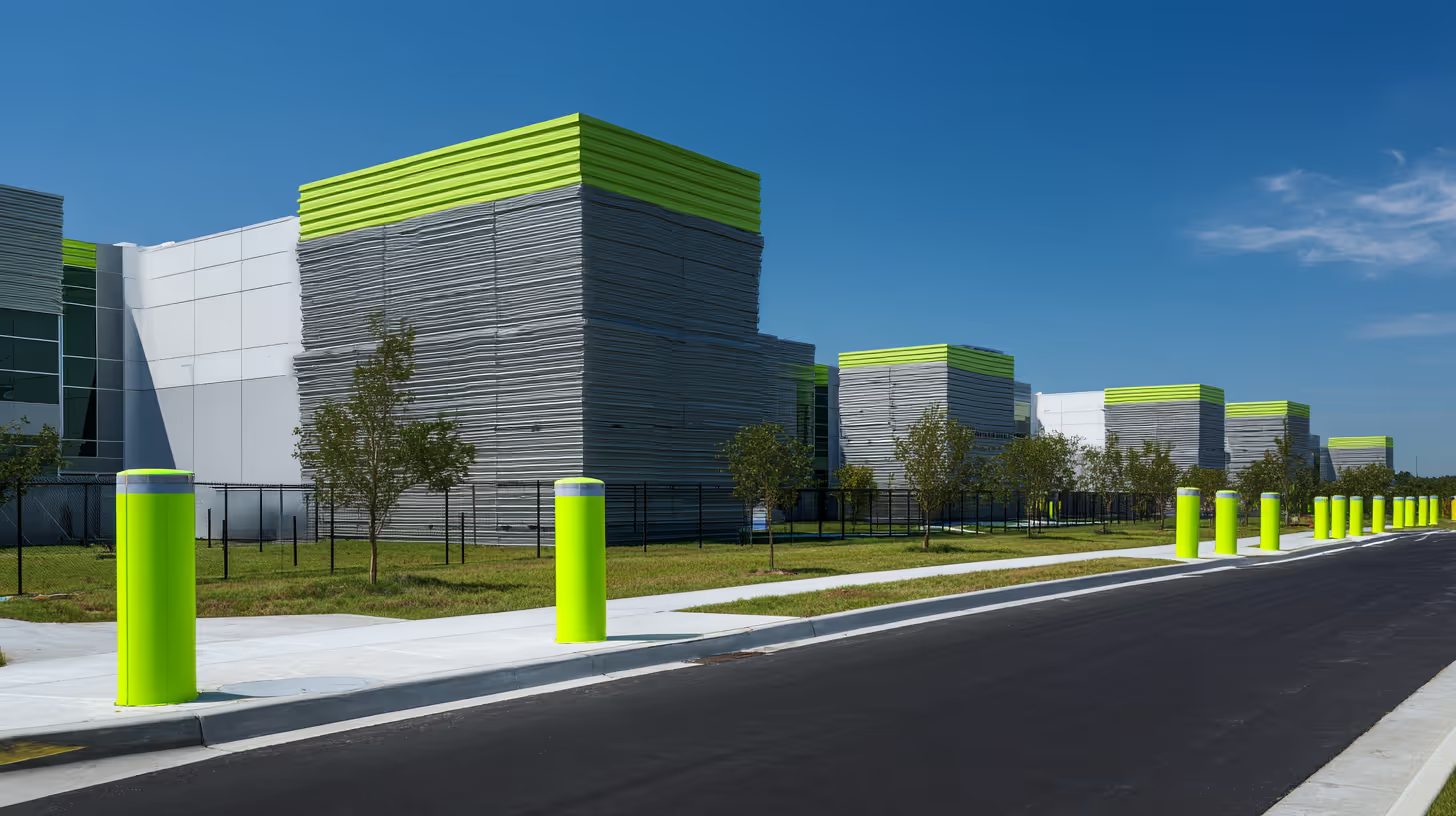
With CarbonOS, we help maximise the energy and operational efficiency of your data centres, supporting continuous uptime and lower operating costs.
our expertise
our expertise
PROGRAMS & TECHNOLOGY PARTNERS
15
specialised AI agents — from an auditable GHG inventory to data centre energy and carbon efficiency, in a single pipeline.

[APPLIED EFFICIENCY]
CarbonOS: AI-native infrastructure for intelligent data centre management.
CarbonOS monitors the performance of your entire critical infrastructure in real time. The platform delivers insights for energy optimisation, thermal management, uptime monitoring, and compliance reporting.
Right arrow iconRight arrow icon
our process
Infrastructure Monitoring
Thermal Management
Quality and Traceability
Capacity Management
[OUR PURPOSE]
Accelerating the digital transformation of data centres with technology, data, and energy efficiency for sustainable operations.
Right arrow iconRight arrow icon
our partners
[OUR SOLUTIONS]
Custom solutions for data centre decarbonisation and efficiency challenges.
Our specialists work with your team to implement CarbonOS, adapting the platform to your data centres’ specific needs. From critical infrastructure monitoring to energy optimisation, we offer complete solutions for high-availability operations.
Infrastructure Management
Energy Management
Thermal Monitoring
Uptime Monitoring
Performance Analysis
Automated inventory icon
ISO Certifications
energy
efficiency
carbonova systems
thermal management and PUE
Companies and partners that trust Carbonova
[Frequently asked questions]

Energy-efficient data centres with AI: frequently asked questions

Short answers on energy, PUE, Scope 2 and carbon rules for data centres. To see them worked out with your own facility data, book a demo.

Right arrow iconRight arrow icon
book a demo

How does Carbonova help a data centre cut energy costs and emissions?

Up arrow icon

Carbonova connects energy meters, SCADA and IoT data from the electrical and cooling infrastructure, and the facility’s power contracts to CarbonOS, a platform of AI agents. CarbonOS calculates PUE, energy per IT kWh and Scope 1 and 2 emissions, flags drift in consumption and ranks efficiency measures by cost and CO₂ avoided. It does not control the cooling system: it gives the operations team the analysis and the evidence to decide.

Where do a data centre’s energy use and emissions come from?

Up arrow icon

Almost entirely from electricity: the power that runs the IT equipment and the power used for cooling, power conversion and lighting, which PUE measures as total facility energy divided by IT energy. The industry average was 1.52 in 2026 (Uptime Institute, 2026), and data centres worldwide used 485 TWh in 2025 (IEA, 2026). Direct emissions come mainly from diesel backup generators and refrigerant leaks.

Which carbon reporting rules apply to data centres in Australia?

Up arrow icon

Under the National Greenhouse and Energy Reporting scheme, a facility that consumes 100 TJ or more of energy a year, or emits 25,000 tCO₂e or more, must report its emissions and energy to the Clean Energy Regulator by 31 October each year. Large companies also report under AASB S2, which requires Scope 1, 2 and 3 emissions; Group 2 entities started with reporting periods beginning on or after 1 July 2026.

How can an Australian data centre prove it runs on renewable electricity?

Up arrow icon

By buying and surrendering certificates: one large-scale generation certificate (LGC) equals 1 MWh of renewable electricity, and the LGC spot price ended the June quarter of 2026 at $7 (Clean Energy Regulator, 2026). Recent government announcements position the new Renewable Electricity Guarantee of Origin as a key way for data centres to show renewable procurement, and it will keep issuing certificates after the Renewable Energy Target ends in 2030. Carbonova matches certificates to metered consumption as Scope 2 evidence.

How does Carbonova help prove renewable electricity in a data centre’s Scope 2?

Up arrow icon

CarbonOS matches metered consumption with power contracts and renewable energy certificates, calculates Scope 2 under both the location-based and market-based methods and keeps the evidence for every MWh claimed. This matters because the GHG Protocol is revising Scope 2: its consultation on hourly matching and deliverability closed in January 2026, and the final standard is expected in 2027. Keeping meter data at the highest resolution available already prepares operators for that change.

Can a data centre’s energy and emissions data be audited line by line?

Up arrow icon

Yes. CarbonOS reads energy meters, SCADA and IoT data from the electrical and cooling infrastructure, invoices for power and generator fuel, and ERP systems such as SAP or Oracle, then normalises and versions everything. Each value keeps its lineage back to the meter or source invoice, a versioned emission factor and a change history, in line with the ISO 14064-3 verification standard, which serves auditors, colocation customers and investors.

[our blog]
Data Centres & Infrastructure: News and Analysis.
Follow the latest trends in data centre technologies, sustainability, and critical infrastructure operations. Our blog delivers in-depth analysis to help your data centre stay efficient and sustainable.
LNG plant on the Burrup Peninsula in the Pilbara at blue hour, seen from red boulders and spinifex (AI-generated illustration)
Regulation
02 Nov 26
Safeguard Review: Is an Australian CBAM Coming?
Right arrow iconRight arrow icon
Minerals processing plant in the Pilbara with an adjacent solar farm and battery storage containers on red earth (AI-generated illustration)
News
18 Oct 26
How AI Cuts Costs and Creates New Revenue for Australian Heavy Industry: The 2026 Numbers
Right arrow iconRight arrow icon
LNG plant on the Burrup Peninsula in the Pilbara at blue hour, seen from red boulders and spinifex (AI-generated illustration)
Guide
30 Sep 26
AASB S2 and the Safeguard Mechanism: Emissions Data You Need
Right arrow iconRight arrow icon