[CEMENT INDUSTRY]

Produce low-carbon cement with precise monitoring. Optimise with CarbonOS.
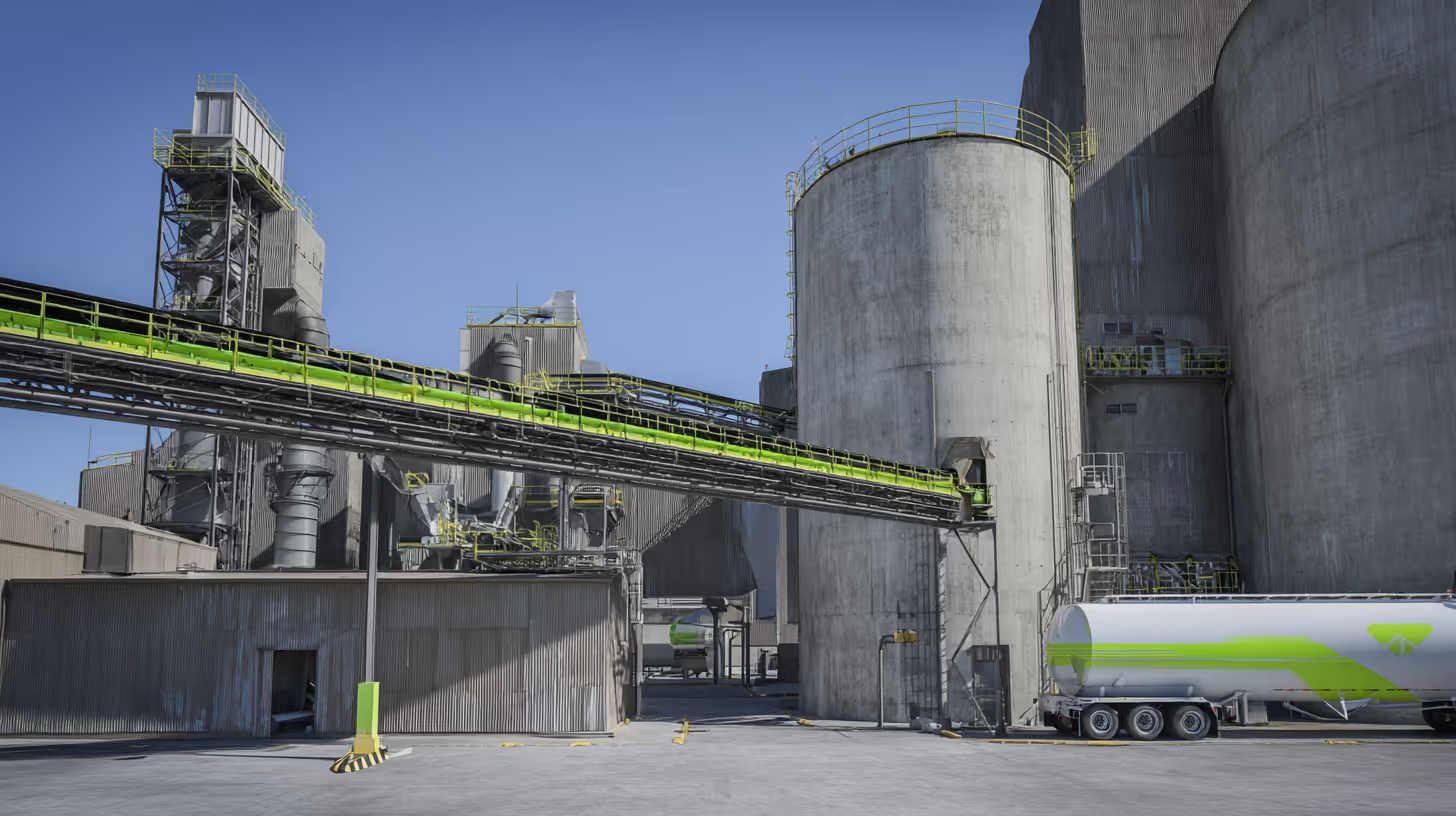
With CarbonOS, Carbonova delivers the data intelligence your cement plant needs to reduce emissions, optimise energy consumption, and stand out in an increasingly competitive and regulated market.
our expertise
our expertise
PROGRAMS & TECHNOLOGY PARTNERS
15
specialised AI agents — from an auditable GHG inventory to a clinker decarbonisation pathway, in a single pipeline.
[APPLIED EFFICIENCY]
CarbonOS: AI-native infrastructure for cement industry decarbonisation.
CarbonOS monitors emissions in real time across every process in your cement plant, from quarrying raw materials to cement grinding. The platform delivers insights for switching to cleaner energy sources, optimising processes, and generating compliance reports.
Right arrow iconRight arrow icon
our process
Process Efficiency
Energy Source Management
Compliance and Reporting
Sustainable Value Chain
[our purpose]
Accelerating the cement industry’s transition to a low-carbon future with technology, data, and market intelligence.
Right arrow iconRight arrow icon
our partners
[OUR SOLUTIONS]
Customised solutions for cement industry emissions challenges.
Our specialists work with your team to implement CarbonOS, adapting the platform to your operation’s specific needs. From production data analysis to integration with existing systems, we offer a complete solution for emissions management.
Kiln Optimisation
Alternative Fuels
Supplementary Cementitious Materials
Sustainability Reports
Life Cycle Assessment
Automated inventory icon
Regulatory Compliance
low-carbon
cement
carbonova systems
regulatory compliance
Companies and partners that trust Carbonova
[Frequently asked questions]

Low-carbon cement with AI: frequently asked questions

Short answers on cost, emissions and carbon rules in a cement plant. To see them worked out with your own plant data, book a demo.

Right arrow iconRight arrow icon
book a demo

How does Carbonova help a cement plant cut costs and emissions?

Up arrow icon

Carbonova connects kiln, mill and energy data to CarbonOS, a platform of AI agents that calculates emissions per tonne of clinker and cement, flags drift in thermal and electrical energy use, and compares alternative-fuel and clinker-factor scenarios by their effect on cost and CO₂. The same dataset produces carbon reports for regulators, customers and investors, with an audit trail back to the source.

Where do a cement plant’s emissions come from?

Up arrow icon

About 60% come from calcining limestone to make clinker, which releases the CO₂ held in the raw material, and most of the rest comes from burning fuel in the kiln (World Economic Forum, 2023). That is why the two biggest levers are the clinker factor, 72% on global average according to the same source, and the kiln’s fuel mix.

Which carbon rules apply to cement in Australia?

Up arrow icon

Facilities emitting more than 100,000 tCO₂e a year are covered by the Safeguard Mechanism, whose baselines fall by 4.9% a year to 30 June 2030. Large companies also report under AASB S2, which requires Scope 1, 2 and 3 emissions; Group 2 entities started with reporting periods beginning on or after 1 July 2026.

Can a cement plant earn credits by cutting below its baseline?

Up arrow icon

Yes. A Safeguard facility that reduces its emissions below its baseline is issued Safeguard Mechanism Credits, one for each tonne of CO₂e below the baseline, which it can sell to other covered facilities or surrender for its own compliance; they are not offsets. Carbonova tracks emissions against the baseline and shows which kiln, fuel and clinker measures create the most credits per dollar spent.

How does Carbonova help use more alternative fuel and less clinker?

Up arrow icon

Using your plant’s real data, the planning agent simulates the cost and CO₂ effect of replacing fossil fuel with waste-derived fuel or biomass and of replacing part of the clinker with materials such as slag, pozzolans or limestone, then ranks the options by cost per tonne of CO₂ avoided. As a benchmark, waste-derived fuels already supply 52% of the heat in French cement kilns (France Ciment, 2023).

Will the emissions numbers stand up to an audit?

Up arrow icon

Yes. Every value has lineage back to its source data, a versioned emission factor and a change history, in line with the ISO 14064-3 verification standard. The same dataset serves regulatory reporting, ISSB-aligned disclosures, the emissions data EU importers need for CBAM and customer requests for product carbon footprints.

[our blog]
Cement: News and Analysis.
Follow the latest trends in decarbonisation technologies, regulations, and innovations for the cement industry. Our blog delivers in-depth analysis to help your company stay ahead on the path to sustainability.
LNG plant on the Burrup Peninsula in the Pilbara at blue hour, seen from red boulders and spinifex (AI-generated illustration)
Regulation
02 Nov 26
Safeguard Review: Is an Australian CBAM Coming?
Right arrow iconRight arrow icon
Minerals processing plant in the Pilbara with an adjacent solar farm and battery storage containers on red earth (AI-generated illustration)
News
18 Oct 26
How AI Cuts Costs and Creates New Revenue for Australian Heavy Industry: The 2026 Numbers
Right arrow iconRight arrow icon
LNG plant on the Burrup Peninsula in the Pilbara at blue hour, seen from red boulders and spinifex (AI-generated illustration)
Guide
30 Sep 26
AASB S2 and the Safeguard Mechanism: Emissions Data You Need
Right arrow iconRight arrow icon