.avif)

AASB S2 and the Safeguard Mechanism: Emissions Data You Need
If your company is in Group 2 of Australia's mandatory climate reporting regime, your first AASB S2 reporting period is your first financial year beginning on or after 1 July 2026. For a June year-end, that year is already under way, and its Scope 1 and 2 emissions will be subject to limited assurance. If you also operate a Safeguard facility, its baseline is falling by 4.9% a year to 30 June 2030. Both regimes reward the same thing: facility-level emissions data that is measured, aligned to your financial year and backed by evidence an auditor can follow.
What applies now
- Mandatory climate reporting. Chapter 2M of the Corporations Act requires sustainability reports prepared under AASB S2 in three groups: Group 1 for financial years beginning on or after 1 January 2025, Group 2 on or after 1 July 2026 and Group 3 on or after 1 July 2027.
- Scope 3. Transition relief applies in your first reporting period; Scope 3 emissions are required from the second.
- Modified liability. Statements about Scope 3 emissions, scenario analysis and transition plans are covered by modified liability settings for financial years beginning between 1 January 2025 and 31 December 2027.
- Assurance. Under ASSA 5010, Group 2's first year requires limited assurance over governance, strategy (climate risks and opportunities) and Scope 1 and 2 emissions. Limited assurance then extends to all disclosures in years two and three, and reasonable assurance over the whole report applies from year four.
- Safeguard Mechanism. Facilities with more than 100,000 t CO2-e of covered emissions a year must keep net emissions below a baseline that declines by 4.9% each financial year to 30 June 2030, with lower rates available to some trade-exposed facilities. Facilities above their baseline must surrender ACCUs or Safeguard Mechanism credits (SMCs); those below can earn SMCs. From 1 July 2030, decline rates will be set in five-year blocks, and a 2026–27 review of the Mechanism is under way.
- NGER. All Safeguard facilities report under the NGER Scheme, and NGER reports are due by 31 October each year.
Who is affected
Group 2 covers entities that meet two of three tests: consolidated revenue of $200 million or more, consolidated gross assets of $500 million or more, or 250 or more employees. It also includes NGER registered corporations not already in Group 1 and asset owners such as super funds and registered schemes with $5 billion or more in assets. Group 3 covers entities meeting two of: revenue of $50 million or more, assets of $25 million or more, or 100 or more employees. A Group 3 entity with no material climate-related financial risks or opportunities can make a statement to that effect instead of preparing climate statements. Safeguard facilities span mining, oil and gas, manufacturing, transport and waste. All of them report under NGER, and NGER registered corporations that report under Chapter 2M fall into Group 1 or Group 2.
The data gaps that matter
- Period. AASB S2 requires emissions for the same period as your financial statements, with no relief. NGER runs from 1 July to 30 June, so a December year-end company must restate.
- Methods. AASB S2 allows NGER measurement methods where NGER applies. Amendments effective for periods from 1 January 2027, which can be adopted early, let NGER reporters keep the AR5 global warming potentials NGER requires instead of recalculating with AR6.
- Boundary. NGER uses operational control. Your AASB S2 inventory must cover the whole reporting group, so parts of the group outside NGER need to be added, along with Scope 3.
- Production. Safeguard baselines are production-adjusted, using production quantities reported under NGER and emissions-intensity values, so production data needs the same rigour as emissions data.
Steps to take in 2026–27
- Confirm your group and first period. For a June year-end Group 2 entity, the first year runs from 1 July 2026 to 30 June 2027; for a December year-end entity, it starts on 1 January 2027.
- Reconcile NGER and AASB S2. Map facility data to the corporate group, align periods and boundaries, and document every adjustment.
- Measure what drives the total. Prioritise the sources behind most of your Scope 1 emissions, such as fuel combustion, process emissions, flaring and fugitives, and use site-specific measured data where the NGER methods allow it.
- Build the evidence trail. For every figure, keep the source data, method, emission factor and version, approvals and supporting documents.
- Start Scope 3 now. Identify material categories and engage key suppliers so that second-year data exists when you need it.
- Model your Safeguard position. Project emissions against a baseline falling 4.9% a year to 2030 and estimate whether you will need ACCUs or SMCs, or will generate SMCs.
Common mistakes
- Reusing NGER totals in a December year-end sustainability report without restating them.
- Assuming modified liability covers Scope 1 and 2. It does not, and those figures are assured from year one.
- Treating limited assurance as a light touch. Your auditor still needs to trace each number to source.
- Neglecting production data, even though Safeguard baselines scale with it.
- Leaving Scope 3 until the second year, when the data should already be flowing.
How Carbonova helps
Brazil-based Carbonova builds Carbonova CarbonOS, an AI-agent platform for greenhouse gas inventories, MRV and regulatory reporting, including AASB S2 climate disclosures. CarbonOS brings SCADA, ERP and IoT data into one versioned stream, links each emission to a physical asset and process, calculates Scope 1, 2 and 3 inventories with traceable calculations, and keeps the evidence and data lineage your auditor will ask for. See our decarbonisation solutions.
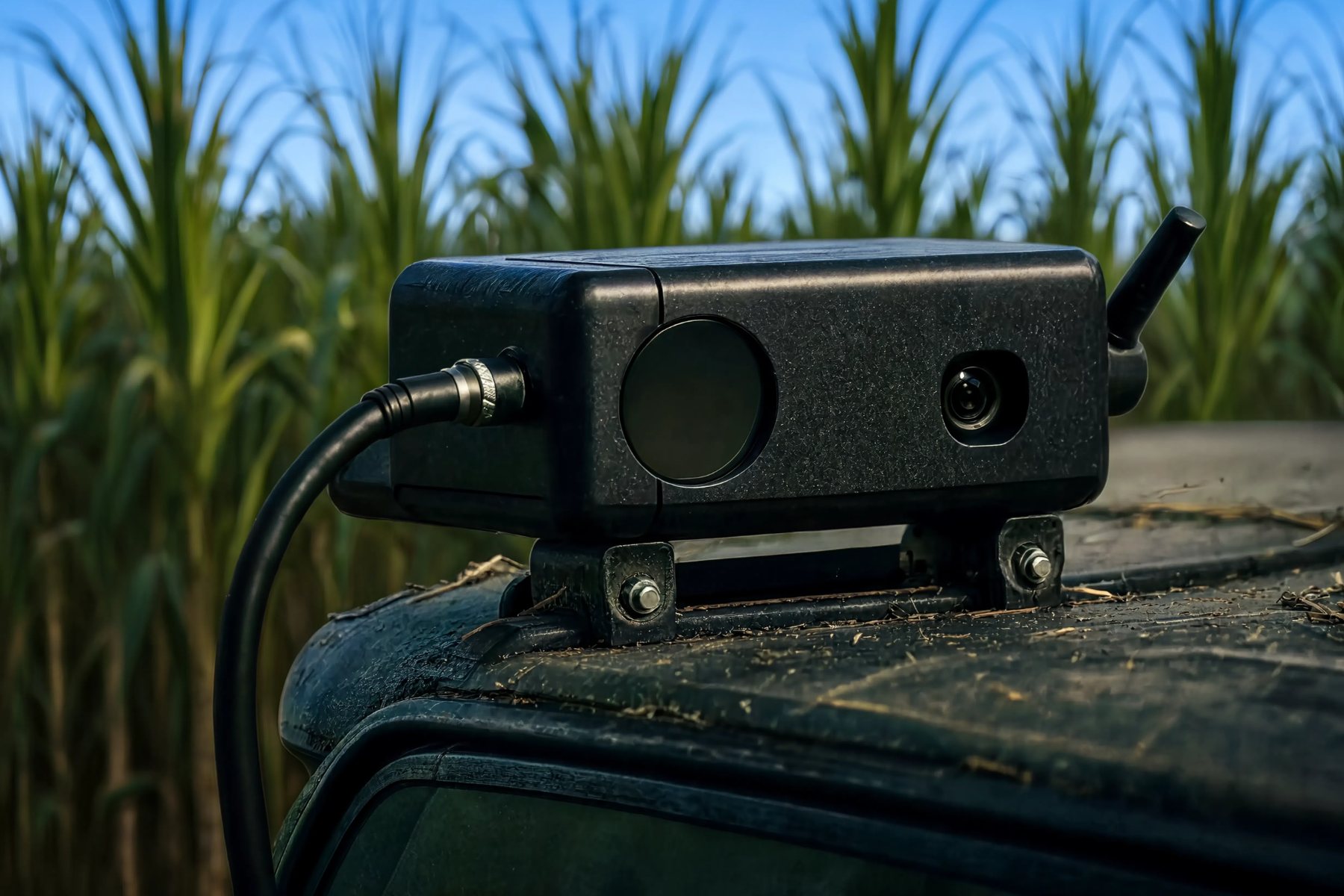
For oil, gas and LNG sites, Carbonova Sense, currently at pilot stage, adds edge-AI flare combustion monitoring that infers whether a flare is burning normally, smoking, out or venting and logs each event as evidence. Carbonova is a software provider, not an assurance practitioner: assurance comes from your auditor.
When does AASB S2 reporting start for Group 2?
For financial years beginning on or after 1 July 2026. A company with a 30 June year-end reports first on 1 July 2026 to 30 June 2027; one with a 31 December year-end starts with the year beginning 1 January 2027. The first report needs Scope 1 and 2 emissions under limited assurance, and Scope 3 is required from the second year.
Can I use my NGER data for AASB S2?
Largely, yes. AASB S2 allows NGER measurement methods where NGER applies, and amendments from 2027, which can be adopted early, let NGER reporters keep AR5 global warming potentials. But emissions must cover the same period as your financial statements, with no relief, and NGER does not cover Scope 3 or parts of the group outside the scheme, so you will need adjustments and additions.
How does the Safeguard baseline decline affect my costs?
Baselines fall by 4.9% a year to 30 June 2030 and are adjusted for production reported under NGER. If net emissions exceed the baseline, you must surrender ACCUs or SMCs; if they come in below it, you can earn SMCs. Accurate measured data therefore affects both your compliance cost and any credits you generate.
If you need measured, auditable emissions data for your first AASB S2 report or your next Safeguard period, book a demo with Carbonova.
Sources
- AASB: AASB S2 general FAQs
- AASB: AASB S2 amendments FAQs
- ASIC: Regulatory Guide 280, Sustainability reporting
- AUASB: ASSA 5010 (amended December 2025)
- Clean Energy Regulator: Safeguard baselines
- Clean Energy Regulator: Safeguard Mechanism
Last reviewed: 30 September 2026


.avif)


