

[AIRPORTS]
Energy and carbon across the whole airport, from terminal to apron.
EMISSIONS PER PASSENGER
kg CO₂e
per passenger and per aircraft movement: terminal, apron, fleet, landings and take-offs, and airport access.
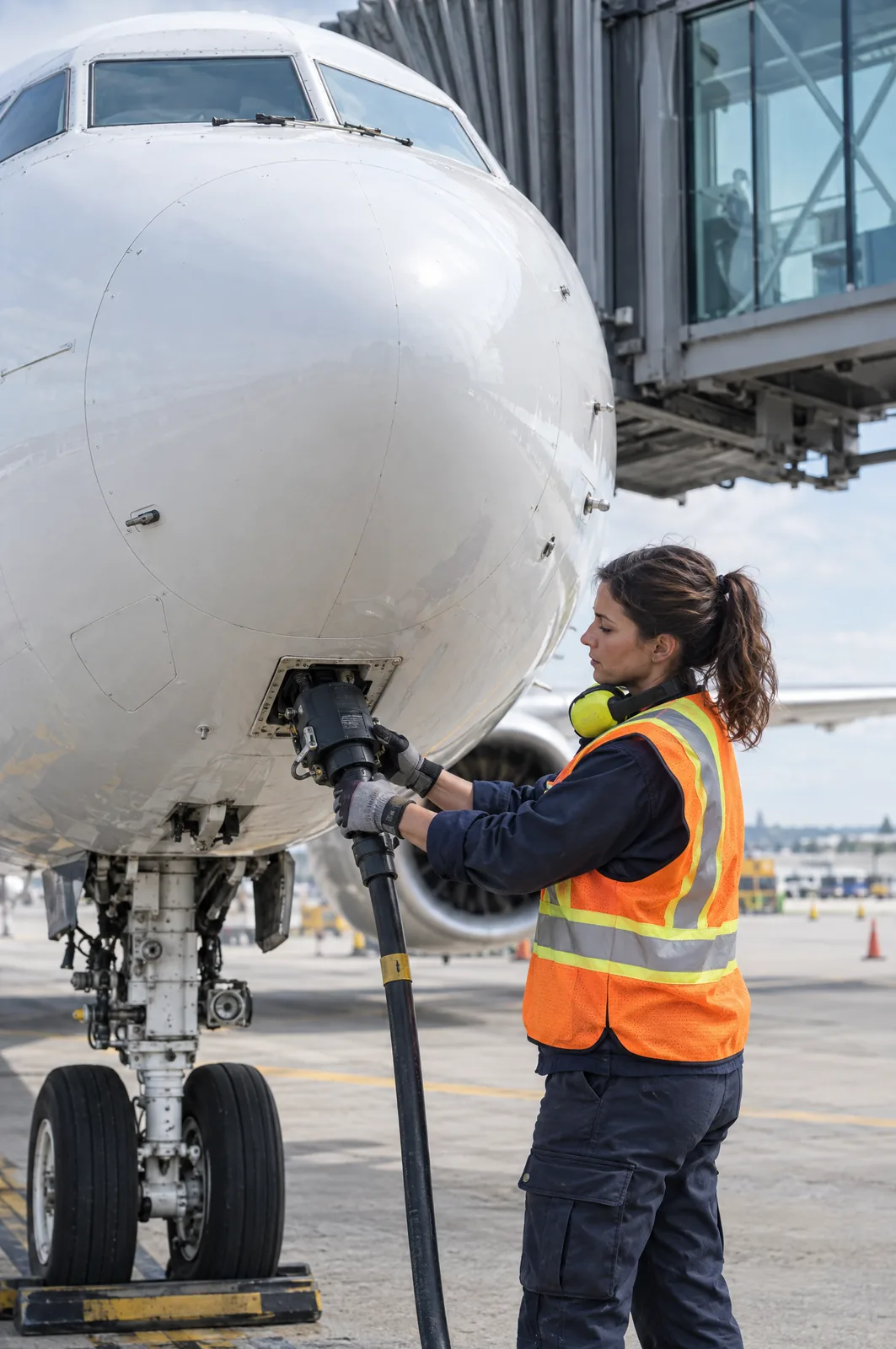


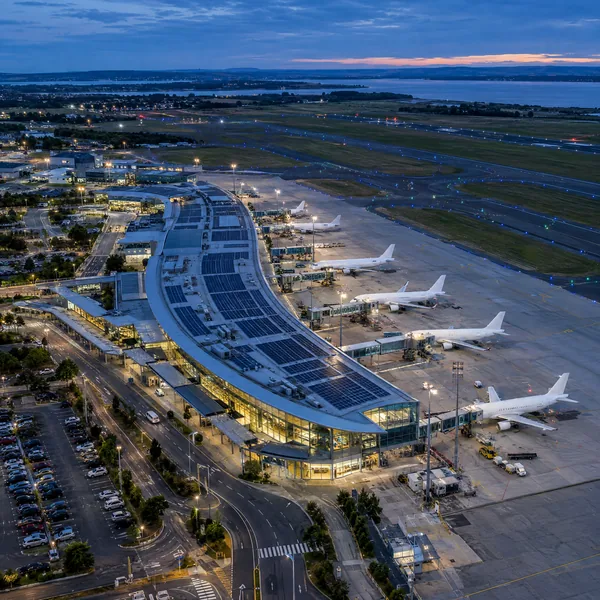
Decree 13,094/2026 implemented ProBioQAV, created by Brazil’s Law 14,993/2024: aircraft operators emitting 10,000 tCO₂ or more a year must cut the emissions of their domestic flights by 1% from 2027, rising to 10% in 2037. In the EU, ReFuelEU Aviation has required 2% SAF since 2025, rising to 6% from 2030.
Under AFIR, Regulation (EU) 2023/1804, airports on the trans-European network must already supply electricity to parked aircraft at contact stands. By the end of 2029 the requirement extends to remote stands, and from 2030 that power cannot come from fossil fuels.
Airport Carbon Accreditation’s Year 16 results, published in March 2026, count 590 accredited airports in 91 countries, handling 53.6% of global passenger traffic; 21 have reached Level 5, which requires cutting Scope 1 and 2 emissions by at least 90%. From Level 3 up, Scope 3 emissions from landings, take-offs and airport access enter the verified footprint.
Status as of November 2026. Rules and deadlines may change.


Short answers on the inventory, Airport Carbon Accreditation and the rules reaching the apron. To see it with your own data, book a demo.

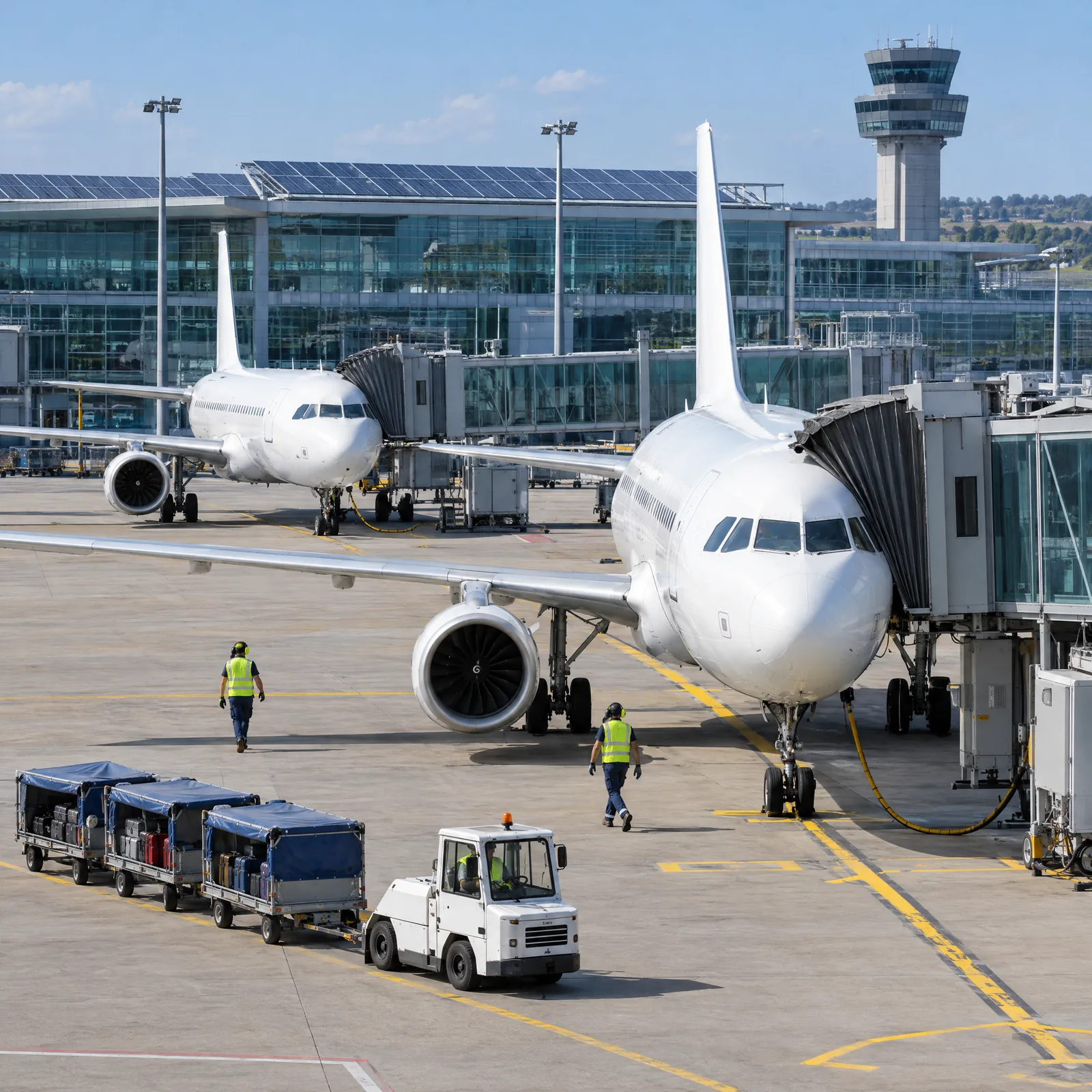
Scope 1 covers the airport’s own vehicle fleet, generators, boilers, refrigerant gases from air conditioning and firefighting training. Scope 2 covers purchased electricity for the terminal, HVAC, the baggage system and airfield lighting. Scope 3 covers the aircraft landing and take-off cycle, APU use on the ground, third-party ground support equipment, passenger and staff access, waste and concessionaires. CarbonOS follows the GHG Protocol and Airport Carbon Accreditation guidance.
It organizes the inventory the way each level asks for it: Scopes 1 and 2 at Level 1, comparison with previous years at Level 2, Scope 3 and stakeholder engagement at Level 3, and absolute targets aligned with 1.5 °C or 2 °C pathways from Level 4. Proof Engine gathers the evidence the independent verifier asks for. Accreditation is awarded by the program, not by Carbonova.
The landing and take-off cycle is calculated from AODB movements by aircraft type and taxi times, and APU use from the time on the ground at each stand. Supply Chain gathers the consumption reported by airlines, ground handlers and concessionaires and separates primary data from estimates. Where data is missing, an average factor with a recorded source is used, and the report shows how much each estimate weighs.
Yes. Signal Ingest reads energy meters, the terminal BMS, substation SCADA, the AODB and the ERP (SAP, TOTVS and others) through an API, a database connection or file import, with read-only access. Nothing has to be re-keyed.
In the EU, AFIR requires electricity for parked aircraft at contact stands and, by December 31, 2029, at remote stands of trans-European network airports; ReFuelEU Aviation has required 2% SAF since 2025, rising to 6% from 2030; and the CSRD covers companies with more than 1,000 employees and turnover above €450 million. In Brazil, ProBioQAV starts in 2027, and CVM Resolution 244/2026 made ISSB-based reporting voluntary but requires listed companies that do not report to explain why from 2027. Check the details with your legal team.
Energy bills and meter readings, fuel records for the fleet and generators, and a one-year export of aircraft movements. In a demo, Carbonova shows how this data becomes an inventory per asset and per passenger, and what connecting your BMS and AODB involves.


