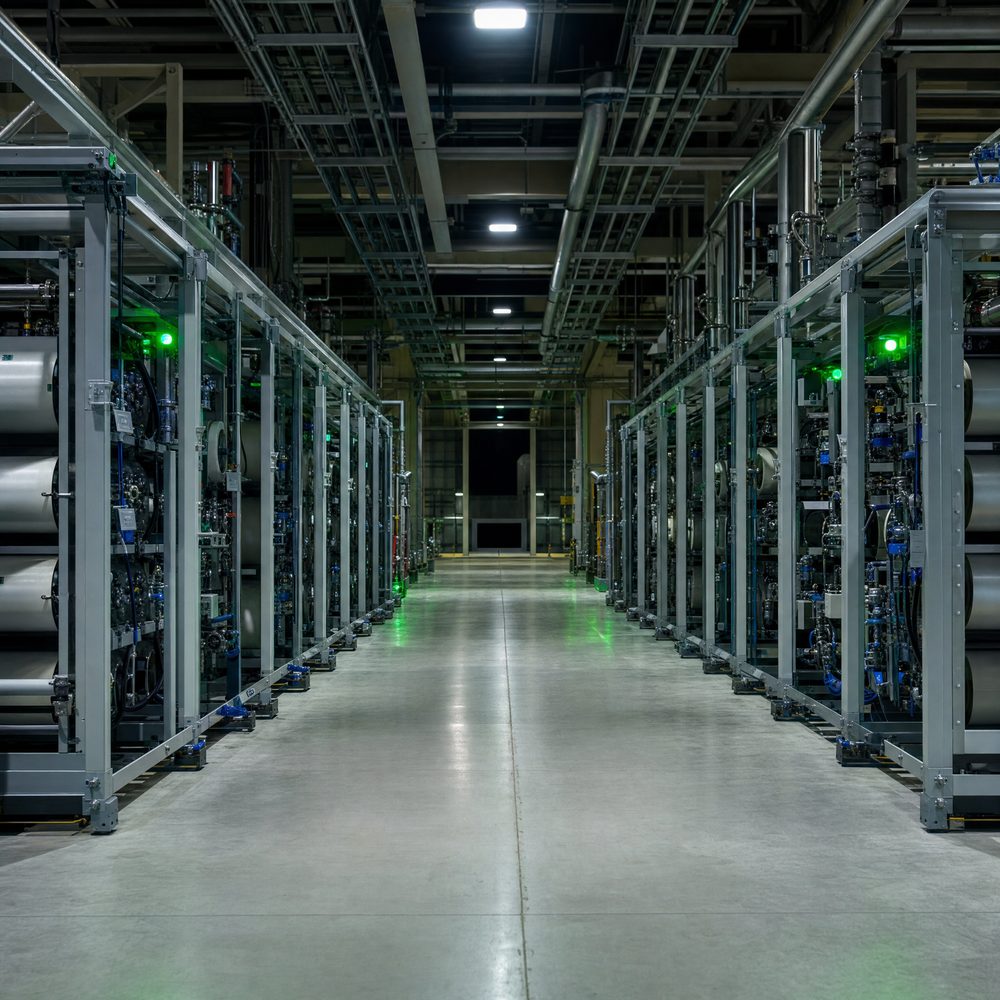
e-Fuels Intelligence.

The energy-efficiency intelligence for the fuels of the future. AI agents that optimise electrolysis, synthesis and certification in the production of green hydrogen, e-methanol, e-ammonia and e-SAF, from electron to certified molecule.
[what we do]
More molecules per kWh. Proof in every batch.
Automated inventory icon
Electron → molecule dispatch
Schedules electrolyser load hour by hour against the power contract, prices, wind and solar forecasts and curtailment, while respecting the synthesis minimum load, the hydrogen buffer and temporal-correlation rules.
Stack health
Tracks cell voltage, efficiency and degradation in every stack, anticipates failures and flags the right time to replace each stack, with the cost of degradation built into dispatch.
Regulatory compliance icon
Flexible synthesis
Adjusts the e-methanol, e-ammonia or Fischer-Tropsch loop when hydrogen supply varies: ramp rates, recycle, purge and catalyst conditions, measured in kWh per kilogram of product and independent of the licensor.
Footprint and certification per batch
Calculates each batch’s footprint from measured data and assembles the evidence pack for verification: Low Carbon Hydrogen Standard reporting in the UK and RFNBO certification for exports to the European Union.
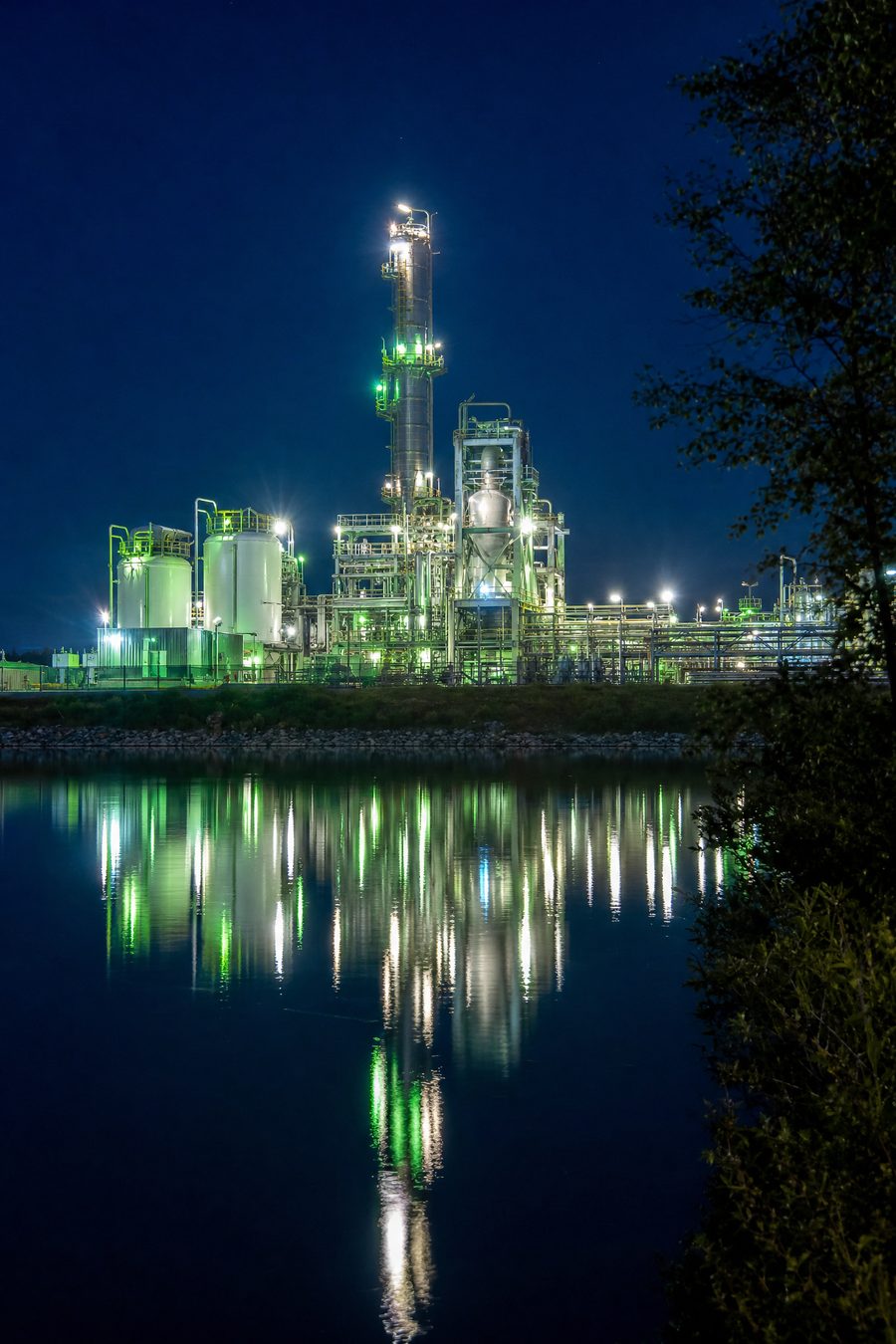
Planta de e-metanol iluminada à noite, refletida na água (ilustração gerada por IA)
In the European Union, most grid-connected plants selling renewable (RFNBO) hydrogen must match renewable electricity and output within the same calendar month until the end of 2029 and within the same hour from 2030, under the rules in force. The same data decides efficiency, certification and price. Evidence is no longer an annual report; it is operating data.
Low Carbon Hydrogen Standard
Delegated Regulation (EU) 2023/1184
37 Mt
of low-emission hydrogen a year by 2030: the IEA’s latest count of announced projects, down from 49 Mt in its previous review. The plants that get built will be the efficient ones.
42%
of the hydrogen used by EU industry must be renewable fuel of non-biological origin (RFNBO) by 2030, and 60% by 2035, under RED III. Demand written into law, next door.
Right arrow iconRight arrow icon
learn more
Industrial facility monitored by the CarbonOS carbon management systemSustainable logistics and low-carbon transportationCorporate team in a meeting about climate complianceSustainability specialist analysing carbon emissions data
[our purpose]
Carbonova’s e-Fuels Intelligence connects power, process and certification in a single system: the same data that cuts kWh per kilogram proves the origin and footprint of every molecule. It runs above the plant’s control system, with any electrolyser and any licensor.
Right arrow iconRight arrow icon
learn more
[the carbonova solution]
From electron to certified molecule.
Renewable energy icon
Hourly simulation of the project before FID: electrolysis, renewables, storage and synthesis sized against historical curtailment and price data.
Real-time optimised operations: dispatch, stack health and flexible synthesis, measured in kWh per kilogram of product.
Continuous certification evidence: footprint per batch, an audit trail and data ready for the Low Carbon Hydrogen Standard and RFNBO.
kWh per kg
footprint per batch
[ON THE PLATFORM]

How it works in CarbonOS

Six agents read the plant and the power market and return decisions and evidence, not reports.

01 · MEASURE
Power, process and market data in one place

Reads the DCS, historian and meters, plus wind, solar and price forecasts, and closes the balance from electron to molecule.

02 · DECIDE
Dispatch and synthesis, hour by hour

Agents adjust load, buffer and synthesis for the lowest kWh per kilogram, within certification rules and the plant’s limits.

03 · PROVE
Footprint and evidence per batch

Every batch leaves with its carbon intensity calculated and the audit trail ready for the certification body and the buyer.

app.carbonova.ai · e-Fuels Intelligence
e-Methanol plant (demo)
Specific energy use
10.9 MWh/t
Capacity factor
71%
Batch footprint
11 gCO₂e/MJ
Active agents
● 6
illustrative data from the demo environment
Electrolysise-methanole-ammoniae-SAFLCHS · RFNBO